Every year, millions of vehicles across the UK undergo an MOT test to ensure they meet the minimum legal safety and environmental standards. While many vehicles pass without issue, thousands fail because of faults that could have been identified and repaired beforehand.
Understanding the top reasons cars fail their MOT can help you prepare your vehicle, avoid unnecessary repair costs and improve your chances of passing first time. Many MOT failures involve relatively simple problems such as worn tyres, faulty lights or damaged windscreen wipers—issues that are often inexpensive to fix if caught early.
In this guide, we’ll explain the top reasons cars fail their MOT, why these defects matter, and what you can do to prevent them before your next MOT appointment.
Top Reasons Cars Fail MOT: Quick Answer
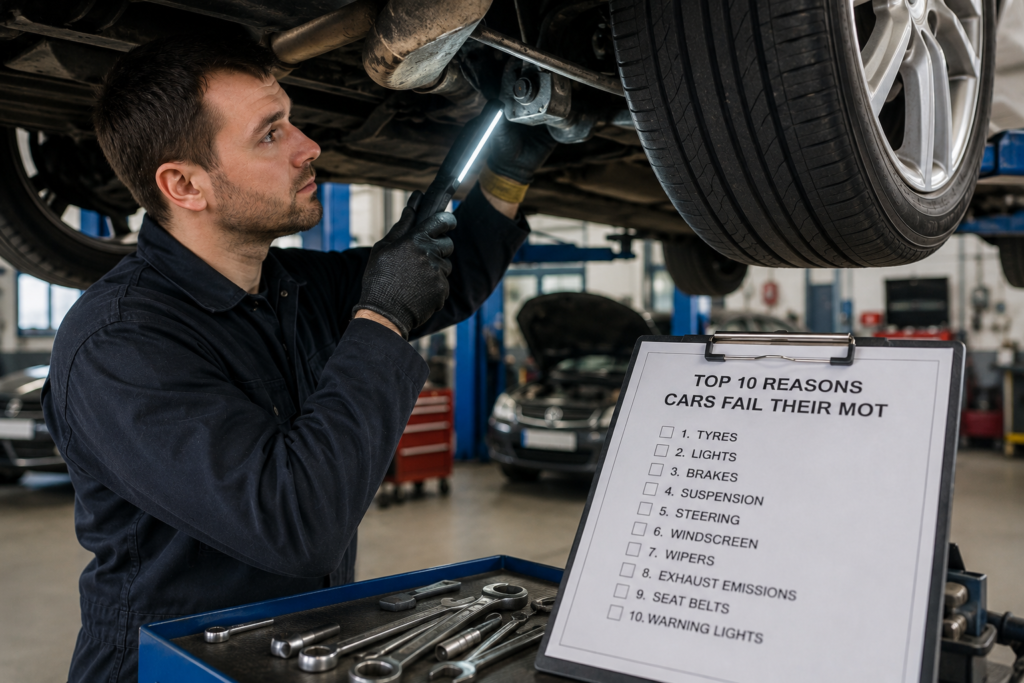
The top reasons cars fail their MOT include:
- Worn tyres below the legal tread depth
- Faulty headlights, brake lights or indicators
- Brake wear or braking system defects
- Suspension problems
- Steering faults
- Windscreen damage
- Worn windscreen wipers
- Excessive exhaust emissions
- Faulty seat belts
- Dashboard warning lights
Many of these issues can be identified with a simple pre-MOT inspection, helping drivers avoid unnecessary failures and additional repair costs.
Why Do Cars Fail Their MOT?
An MOT test is designed to assess whether a vehicle meets the minimum standards for road safety and environmental performance established by the Driver and Vehicle Standards Agency (DVSA).
Vehicles fail when one or more components no longer meet these standards.
In many cases, these defects develop gradually through normal wear and tear. Regular servicing and routine maintenance help identify these problems before they become MOT failures.
If you’re unsure what is checked during an MOT, our guide on What Do They Check in an MOT? explains the full inspection process.
Top 10 Reasons Cars Fail Their MOT
1. Worn Tyres
Tyres are consistently one of the top reasons cars fail their MOT.
Your tyres provide the only contact between your vehicle and the road, making them essential for braking, steering and overall vehicle control.
During an MOT inspection, the tester checks:
- Tread depth
- Sidewall condition
- Cuts and bulges
- Uneven wear
- Correct tyre size
The legal minimum tread depth for cars in the UK is 1.6mm across the central three-quarters of the tyre.
However, replacing tyres before they reach the legal limit improves grip, particularly in wet weather, and reduces the likelihood of receiving an MOT advisory or failure.
Simple tyre inspections every month can significantly improve your chances of passing your MOT.
2. Faulty Lights
Lighting defects remain one of the easiest MOT failures to prevent.
During the inspection, the tester checks:
- Headlights
- Brake lights
- Indicators
- Rear lights
- Fog lights
- Number plate lights
- Hazard lights
A single blown bulb can cause your vehicle to fail its MOT.
Before your appointment, ask someone to help you check every exterior light or use reflections from nearby windows or walls to confirm they are working correctly.
Replacing a faulty bulb before the test is far simpler and cheaper than arranging a retest.
3. Brake Problems
Your braking system is one of the most important safety features on your vehicle.
Any defects affecting braking performance can result in an MOT failure.
The MOT tester assesses:
- Brake pads
- Brake discs
- Brake callipers
- Brake hoses
- Brake pipes
- Brake efficiency
- Handbrake performance
Common warning signs that your brakes require attention include:
- Squealing noises
- Grinding sounds
- Vibration when braking
- Longer stopping distances
- Vehicle pulling to one side
If you notice any of these symptoms, arrange an inspection before your MOT.
Replacing worn brake pads early can prevent damage to brake discs and reduce repair costs.
4. Suspension Wear
Suspension problems are another common reason vehicles fail an MOT.
The suspension system helps maintain tyre contact with the road, improves handling and provides a comfortable ride.
During the MOT, the tester checks:
- Shock absorbers
- Coil springs
- Suspension arms
- Ball joints
- Suspension bushes
Worn suspension components may cause:
- Knocking noises
- Uneven tyre wear
- Poor handling
- Excessive bouncing
- Vehicle instability
Regular servicing can identify suspension wear before it becomes a major MOT defect.
5. Steering Issues
Your steering system is carefully inspected to ensure your vehicle can be controlled safely.
The MOT tester checks:
- Steering wheel condition
- Steering rack
- Track rod ends
- Steering column
- Steering joints
Signs your steering may require attention include:
- Steering pulling to one side
- Excessive steering wheel play
- Vibrations
- Unusual noises while turning
Ignoring steering issues can compromise vehicle safety and increase the likelihood of MOT failure.
Looking for a Reliable MOT Test?
If your annual inspection is approaching, Gladstone Tyres & Autocare provides professional Car MOT in York for all makes and models.
Our DVSA-approved technicians carry out thorough inspections, explain any advisory items clearly and provide honest recommendations without unnecessary repairs.
MOT tests are carried out according to standards established by the Driver and Vehicle Standards Agency (DVSA), helping ensure vehicles meet minimum road safety and environmental requirements.
6. Windscreen Damage
Your windscreen provides structural support to the vehicle and ensures clear visibility while driving. Even relatively small chips or cracks can become larger over time, particularly during changes in temperature or after driving over uneven roads.
During an MOT inspection, the tester checks:
- Cracks within the driver’s field of vision
- Chips that exceed the permitted size
- Damage affecting visibility
- Overall condition of the windscreen
If a crack or chip falls within the driver’s line of sight or exceeds the legal limits, your vehicle may fail its MOT.
Before your MOT appointment, inspect your windscreen carefully. Small chips can often be repaired quickly and at a much lower cost than replacing the entire windscreen.
7. Worn Windscreen Wipers
Windscreen wipers play an important role in maintaining visibility during rain, snow and poor weather conditions.
The MOT tester checks whether the wipers:
- Clear the windscreen effectively
- Are securely fitted
- Have damaged or split rubber blades
- Operate correctly
Worn wiper blades often leave streaks or fail to remove water properly, reducing visibility and increasing the risk of an MOT failure.
Replacing a pair of wiper blades is inexpensive and only takes a few minutes, making this one of the easiest MOT failures to avoid.
8. Excessive Exhaust Emissions
Modern vehicles must comply with strict emissions standards.
During the MOT, the tester measures your vehicle’s exhaust emissions to ensure they fall within the legal limits.
For petrol vehicles, this includes checking emissions from the exhaust system.
For diesel vehicles, additional attention is given to:
- Diesel Particulate Filter (DPF)
- Smoke emissions
- Exhaust condition
Common causes of excessive emissions include:
- A blocked DPF
- Faulty oxygen sensors
- Damaged catalytic converters
- Engine management faults
- Poor engine maintenance
If your diesel vehicle regularly travels short distances, the DPF may not complete its regeneration cycle, increasing the likelihood of blockage and MOT failure.
Routine servicing and professional diagnostics can often identify emissions-related issues before they affect your MOT result.
9. Faulty Seat Belts
Seat belts are one of the most important safety features in any vehicle and are carefully inspected during every MOT.
The tester checks:
- Seat belt condition
- Locking mechanism
- Retraction
- Security
- Mounting points
Seat belts showing signs of excessive wear, damage or poor operation may result in an MOT failure.
Before your appointment, test every fitted seat belt to ensure it locks correctly, retracts smoothly and shows no signs of fraying or damage.
10. Dashboard Warning Lights
Modern vehicles rely on electronic systems to monitor safety and engine performance.
During your MOT, certain dashboard warning lights may affect the outcome of the inspection.
Common warning lights include:
- Engine Management Light
- ABS Warning Light
- Airbag Warning Light
- Electronic Stability Control (ESC)
- Brake System Warning Light
If one of these warning lights remains illuminated after the engine has started, it could indicate a fault that requires investigation before your MOT.
Ignoring dashboard warning lights often leads to more expensive repairs later and increases the risk of failing your MOT.
How to Avoid the Top Reasons Cars Fail Their MOT
Fortunately, many MOT failures can be prevented through regular maintenance and a few simple checks before your appointment.
Here’s how you can reduce the risk of failing:
Check Your Lights Monthly
Walk around your vehicle once a month and confirm that all exterior lights are working correctly.
Replacing a faulty bulb immediately can prevent an unnecessary MOT failure.
Inspect Your Tyres Regularly
Check:
- Tread depth
- Tyre pressures
- Sidewall condition
- Uneven wear
Keeping your tyres in good condition improves safety and reduces the likelihood of receiving advisories or failures.
Listen for Unusual Noises
Grinding brakes, knocking suspension or steering vibrations should never be ignored.
Early diagnosis often prevents more serious mechanical problems.
Replace Worn Wiper Blades
Don’t wait until your MOT to replace damaged wipers.
Good visibility is essential for safe driving throughout the year.
Pay Attention to Dashboard Warning Lights
If a warning light appears, arrange professional diagnostics as soon as possible.
Ignoring warning lights rarely makes the problem disappear.
Book Regular Servicing
Routine servicing helps identify worn components before they become MOT failures.
Many garages recommend combining your annual service with your MOT to save time and reduce future repair costs.
Why Regular Servicing Helps Prevent MOT Failures
One of the best ways to reduce the risk of MOT failure is through regular servicing.
Unlike an MOT, which only checks whether your vehicle meets the minimum legal standards, a service focuses on maintaining the vehicle’s overall mechanical condition.
Routine servicing helps identify:
- Brake wear
- Suspension issues
- Fluid leaks
- Steering problems
- Battery condition
- Engine performance concerns
Addressing these issues early not only improves reliability but also reduces the chances of receiving advisory notices or failing your MOT.
Many motorists choose to book their service shortly before their MOT to ensure their vehicle is in the best possible condition.
Looking for Professional MOT Testing?
If your MOT is due soon, Gladstone Tyres & Autocare provides professional Car MOT in York for petrol, diesel, hybrid and electric vehicles.
Our experienced technicians carry out thorough DVSA-approved inspections, explain any advisory items clearly and provide honest recommendations to help keep your vehicle safe and roadworthy.
Expert Tips to Reduce the Risk of MOT Failure
Preventing an MOT failure starts long before your annual test. Consistent maintenance throughout the year helps keep your vehicle in good condition and reduces the likelihood of unexpected defects.
Our technicians recommend the following tips to improve your chances of passing your MOT first time.
Carry Out Monthly Vehicle Checks
A quick monthly inspection can help identify problems before they become MOT failures.
Check your:
- Tyres and tread depth
- Exterior lights
- Windscreen and wipers
- Fluid levels
- Number plates
- Dashboard warning lights
Spending just a few minutes each month can prevent many common MOT failures.
Deal With Problems Early
Many motorists delay repairs until their MOT is due. Unfortunately, minor faults often become more serious and expensive over time.
If you notice:
- Strange noises
- Poor braking
- Steering issues
- Warning lights
- Increased exhaust smoke
Arrange a professional inspection as soon as possible.
Early diagnosis often reduces repair costs and helps prevent further damage.
Don’t Ignore MOT Advisories
Passing your MOT with advisory notices doesn’t mean those issues should be forgotten.
Advisories indicate components that are beginning to wear and could become major defects before your next MOT.
If you’d like to understand what advisory notices mean, read our guide.
Repairing advisory items promptly helps improve vehicle safety and reduces the likelihood of future MOT failures.
Prepare Your Vehicle Before Every MOT
One of the simplest ways to improve your chances of passing is to carry out a basic pre-MOT inspection.
Checking your lights, tyres, brakes, mirrors, windscreen and warning lights before your appointment can prevent many avoidable failures.
For a complete checklist, read our guide.
Understand What Is Checked During an MOT
Many drivers are surprised by what the MOT inspection actually covers.
Understanding the inspection criteria allows you to prepare more effectively and identify potential issues before your appointment.
Read our detailed guide.
Why Choose Gladstone Tyres & Autocare?
If your MOT is approaching, choosing a trusted local garage can make all the difference.
At Gladstone Tyres & Autocare, we provide professional Car MOT in York for petrol, diesel, hybrid and electric vehicles.
Our experienced technicians use DVSA-approved testing procedures and provide honest advice, transparent pricing and reliable workmanship.
Drivers choose us because we offer:
- DVSA-approved MOT testing
- Experienced and qualified technicians
- Honest pass and fail assessments
- Transparent pricing
- Fast appointment availability
- Modern diagnostic equipment
- Vehicle servicing and repairs under one roof
- Friendly customer service
Whether your vehicle passes first time or requires repairs, we’ll explain the results clearly and help you get back on the road safely.
Frequently Asked Questions About the Top Reasons Cars Fail Their MOT
What is the number one reason cars fail their MOT?
Worn tyres, faulty lights and brake defects are consistently among the most common MOT failure reasons in the UK. Regular maintenance and simple pre-MOT checks can help prevent these issues.
Can I drive my car if it fails its MOT?
It depends on the type of defect. Vehicles with dangerous defects should not be driven until repaired. In some cases, vehicles with major defects may only be driven to a pre-booked repair appointment if they remain roadworthy.
Can worn tyres cause an MOT failure?
Yes. Tyres below the legal tread depth of 1.6mm, or tyres with cuts, bulges or other damage, are common reasons for MOT failure.
Will dashboard warning lights fail an MOT?
Yes. Certain warning lights, including ABS, airbag and engine management lights, may result in an MOT failure if they indicate a fault with a tested system.
How can I reduce the chances of failing my MOT?
Regular servicing, checking tyres and lights, replacing worn wiper blades and addressing warning lights early can significantly improve your chances of passing your MOT.
How often should I have my vehicle serviced?
Most manufacturers recommend servicing your vehicle every 12 months or according to the mileage intervals specified in your owner’s handbook.
Routine servicing helps identify problems before they become MOT failures.
Final Thoughts on the Top Reasons Cars Fail Their MOT
Understanding the top reasons cars fail their MOT gives you the opportunity to prepare your vehicle properly and reduce the risk of unexpected repair costs.
Many failures are caused by everyday wear and tear rather than major mechanical problems. By inspecting your tyres, lights, brakes, windscreen, seat belts and dashboard warning lights before your appointment, you can improve your chances of passing first time.
Regular servicing and prompt attention to advisory notices also play an important role in keeping your vehicle safe, reliable and legally roadworthy throughout the year.
Book Your Car MOT in York Today
If your MOT is due soon, book your Car MOT in York with Gladstone Tyres & Autocare.
Our experienced technicians provide professional DVSA-approved MOT testing, honest advice and reliable vehicle care for drivers across York and the surrounding areas.
Whether you need an MOT, routine servicing or repairs following a failed inspection, our team is here to help.
Contact Gladstone Tyres & Autocare today to arrange your MOT appointment and keep your vehicle safe and roadworthy.