Signs you need new tyres are often easy to spot if you know what to look for. Unfortunately, many drivers only discover their tyres are unsafe when they fail an MOT or experience poor handling on wet roads. At Gladstone Tyres & Autocare, we inspect tyres every day for drivers across Middlesbrough and Teesside, and we’ve found that catching tyre problems early can improve safety, reduce repair costs and help you avoid unexpected MOT failures.
Whether you drive mainly around Middlesbrough’s busy streets, commute along the A19 or A66, or regularly travel across North Yorkshire, this guide explains the warning signs that indicate it’s time to replace your tyres.
What Are the Signs You Need New Tyres?
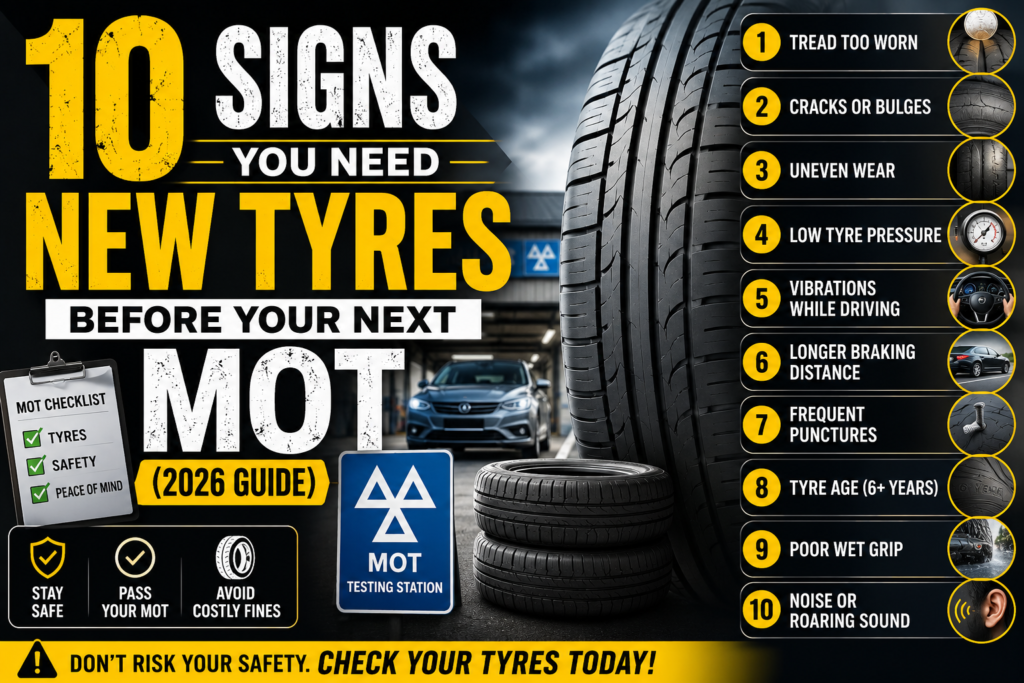
The most common signs you need new tyres include low tread depth, uneven tyre wear, sidewall damage, cracks, bulges, punctures, excessive road noise, steering vibration, poor wet grip and frequent pressure loss. Replacing worn tyres early helps improve safety and reduces the risk of MOT failure.
Can Worn Tyres Fail an MOT?
Yes. Worn tyres are one of the most common reasons vehicles fail an MOT. Tyres with tread below the legal 1.6mm limit, exposed cords, significant sidewall damage or dangerous defects will result in an MOT failure and should be replaced immediately.
How Much Tread Should Tyres Have?
The legal minimum tyre tread depth in the UK is 1.6mm across the central three-quarters of the tyre. However, tyre safety organisations recommend replacing tyres at around 3mm, particularly for improved wet-weather braking and reduced aquaplaning.
| Tread Depth | Safety Level | Recommendation |
|---|---|---|
| Above 5mm | Excellent | Continue regular inspections |
| 3–5mm | Good | Monitor tyre wear |
| Around 3mm | Reduced Wet Grip | Consider replacement |
| Below 1.6mm | Illegal | Replace immediately |
Expert Tip: Waiting until your tyres reach the legal limit means you’ve already lost a significant amount of wet-weather performance.
10 Signs You Need New Tyres
1. Your Tread Depth Is Running Low
Tyre tread removes water from beneath your tyres, helping maintain grip during rain.
As tread wears down:
- Braking distance increases
- Wet grip decreases
- Aquaplaning becomes more likely
- Vehicle stability is reduced
Many drivers around Middlesbrough experience heavy rain throughout the year, making tread depth especially important.
2. Uneven Tyre Wear
Uneven wear usually indicates another issue.
Common causes include:
- Incorrect tyre pressure
- Poor wheel alignment
- Suspension wear
- Incorrect wheel balancing
If only one side of the tyre is wearing faster, don’t simply replace the tyre—identify the underlying cause.
Common Mistake: Replacing tyres without correcting wheel alignment often results in the new tyres wearing out prematurely.
3. Cracks in the Rubber
Rubber naturally ages.
Over time you may notice:
- Small cracks
- Dry rot
- Hardened rubber compound
These signs reduce grip and increase the likelihood of tyre failure.
4. Sidewall Damage or Bulges
Bulges usually indicate internal structural damage.
They can result from:
- Striking potholes
- Kerb impacts
- Hidden internal tyre failure
A bulging tyre should be replaced immediately.
Safety Tip: Never ignore a sidewall bulge. It dramatically increases the risk of a blowout.
5. Frequent Punctures
Occasional punctures happen.
However, repeated punctures often suggest:
- Ageing tyres
- Weak sidewalls
- Internal tyre damage
Replacing older tyres is usually the safest solution.
6. Poor Grip in Wet Weather
If your vehicle feels unstable during heavy rain, worn tyres may be the cause.
Reduced tread limits water evacuation, increasing the risk of aquaplaning.
Drivers across Teesside regularly encounter wet roads, making tyre condition critical throughout the year.
7. Increased Road Noise
Older tyres often become noisier because:
- Tread blocks wear unevenly
- Rubber hardens
- Internal construction deteriorates
If road noise suddenly increases, have your tyres inspected.
8. Steering Vibrations
Vibrations through the steering wheel can indicate:
- Damaged tyres
- Wheel balancing issues
- Internal tyre separation
- Suspension problems
A professional inspection will identify the exact cause.
9. Your Vehicle Pulls to One Side
If your vehicle doesn’t travel straight, possible causes include:
- Uneven tyre wear
- Incorrect tyre pressure
- Wheel alignment issues
Ignoring the problem accelerates tyre wear and affects handling.
10. Your Tyres Are Several Years Old
Even if the tread appears acceptable, rubber deteriorates over time.
Older tyres become:
- Harder
- Less flexible
- Less effective in wet weather
During routine servicing, experienced technicians can advise whether age alone justifies replacement.
Tyre Wear vs Risk Level
| Warning Sign | Risk Level | Recommended Action |
| Low tread depth | High | Replace immediately |
| Bulges | Critical | Stop driving and replace |
| Sidewall cracks | High | Professional inspection |
| Uneven wear | Medium | Check alignment |
| Steering vibration | Medium | Inspect tyres and balancing |
| Frequent punctures | Medium | Replace if recurring |
| Excessive road noise | Medium | Book inspection |
Why Middlesbrough Driving Conditions Wear Tyres Faster
Local roads present unique challenges.
Drivers regularly encounter:
- Heavy rainfall
- Standing water
- Potholes
- Roundabouts
- Urban stop-start traffic
- Motorway journeys on the A19 and A66
These conditions accelerate tyre wear and increase the importance of regular inspections.
Pre-MOT Tyre Inspection Checklist
Before booking your MOT, check:
☐ Tread depth above 3mm
☐ No sidewall cracks
☐ No bulges
☐ No exposed cords
☐ Even tyre wear
☐ Correct tyre pressure
☐ No steering vibration
☐ No warning lights
☐ Wheel alignment feels normal
☐ Tyres free from significant damage
Signs vs Recommended Action
| Sign | Action |
| Tread below 3mm | Plan replacement |
| Below 1.6mm | Replace immediately |
| Bulges | Stop driving |
| Large cracks | Replace tyre |
| Uneven wear | Inspect alignment |
| Constant vibration | Book inspection |
| Multiple punctures | Replace tyre |
Did You Know?
According to TyreSafe, tyre defects contribute to thousands of roadside incidents every year. Regular tyre inspections and maintaining the correct tyre pressure significantly improve vehicle safety and reduce the risk of preventable accidents.
Expert Advice from Our Workshop
At Gladstone Tyres & Autocare, one of the most common issues we see is uneven tyre wear caused by poor wheel alignment after hitting potholes around local roads. Many drivers assume they only need new tyres, but correcting the alignment at the same time helps the new tyres last considerably longer and improves handling.
Recommended Services
If your tyres show any of these warning signs, consider booking:
- Tyres in Middlesbrough
- Wheel Alignment
- Wheel Balancing
- MOT
- Brake Repairs
- Car Servicing
Combining these services helps maximise tyre lifespan and ensures your vehicle remains safe and roadworthy.
Frequently Asked Questions
What are the signs you need new tyres?
Low tread depth, uneven wear, cracks, bulges, poor wet grip, frequent punctures, vibration and excessive road noise are all common warning signs.
Can worn tyres fail an MOT?
Yes. Tyres below the legal tread depth or with dangerous defects will fail an MOT.
What is the legal tyre tread depth in the UK?
The minimum legal tread depth is 1.6mm across the central three-quarters of the tyre.
Should I replace tyres at 3mm?
Many tyre professionals recommend replacing tyres at around 3mm because wet-weather performance begins to decline.
Can cracked tyres be repaired?
Usually not. Sidewall cracks often require tyre replacement.
Is uneven tyre wear dangerous?
Yes. It affects handling and often indicates wheel alignment or suspension problems.
How often should tyres be inspected?
Inspect them at least once a month and before long journeys.
Should tyres be replaced in pairs?
Yes, replacing tyres in pairs on the same axle is generally recommended for balanced handling.
How long do tyres last?
Most last between 20,000 and 40,000 miles, depending on driving style and maintenance.
What causes tyre bulges?
Usually impacts with potholes or kerbs that damage the tyre’s internal structure.
Does tyre pressure affect tyre life?
Yes. Incorrect pressure increases wear and reduces fuel efficiency.
Why is wheel alignment important?
Proper alignment prevents uneven wear, improves steering and extends tyre lifespan.
Can old tyres still be unsafe?
Yes. Rubber deteriorates with age even if tread depth remains above the legal limit.
Book Your Tyres at Gladstone Tyres & Autocare
If you’ve noticed any of these signs you need new tyres, don’t wait until your MOT or an unexpected breakdown to take action. Our experienced technicians at Gladstone Tyres & Autocare provide professional tyre inspections, tyre fitting, wheel alignment, wheel balancing and MOT preparation for drivers across Middlesbrough, Teesside and the surrounding areas.
We’ll help you choose the right tyres for your vehicle, driving style and budget while ensuring they are fitted correctly for maximum safety and performance.
Gladstone Tyres & Autocare is proud to be an RAC Approved Garage, giving you complete confidence that your vehicle is maintained to recognised industry standards.
Book your tyre inspection or tyre fitting today and drive with confidence on every