
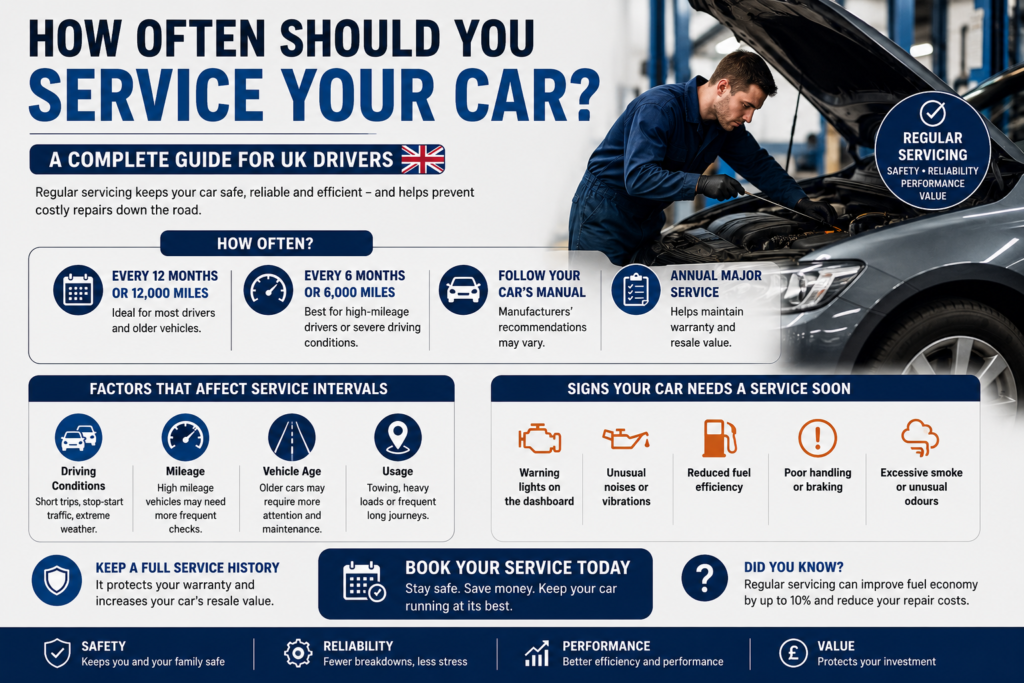
Regular servicing is one of the most important aspects of vehicle ownership. However, many drivers are unsure how often should you service your car and whether servicing is really necessary if their vehicle seems to be running well.
The reality is that regular maintenance helps keep your vehicle safe, efficient, and reliable while reducing the risk of unexpected breakdowns and costly repairs.
In this guide, we’ll explain how often you should service your car, what factors influence service intervals, and why routine servicing remains important even when your vehicle appears to be performing normally.
Why Is Regular Car Servicing Important?
A car consists of hundreds of moving components that experience wear over time. Regular servicing helps identify potential issues before they develop into larger mechanical problems.
Routine servicing can help:
- Improve vehicle safety
- Maintain engine performance
- Improve fuel efficiency
- Reduce repair costs
- Extend vehicle lifespan
- Protect resale value
Servicing also provides peace of mind by ensuring key systems are inspected and maintained by qualified technicians.
How Often Should You Service Your Car?
Most vehicle manufacturers recommend servicing every:
- 12 months, or
- Every 10,000 to 12,000 miles
whichever comes first.
However, service intervals can vary depending on your vehicle, driving habits, and manufacturer recommendations.
Always consult your vehicle handbook for specific servicing schedules.
What Factors Affect Car Service Intervals?
Several factors can influence how often your vehicle should be serviced.
Annual Mileage
Drivers covering high annual mileage place greater demands on their vehicles. More frequent servicing may be beneficial for those regularly travelling long distances.
Driving Conditions
Vehicles used in heavy traffic, frequent stop-start driving, or short journeys may require more regular maintenance than vehicles primarily driven on motorways.
Vehicle Age
Older vehicles often benefit from more frequent inspections as components naturally experience increased wear over time.
Manufacturer Requirements
Many modern vehicles have manufacturer-specific service schedules based on mileage and age.
Following these recommendations can help maintain performance and protect warranties where applicable.
What Happens During a Car Service?
The exact work carried out depends on the type of service being performed.
Interim Service
Typically recommended for high-mileage drivers.
May include:
- Engine oil replacement
- Oil filter replacement
- Brake inspection
- Tyre inspection
- Fluid level checks
- Battery checks
Full Service
A more comprehensive maintenance package that includes additional vehicle inspections and checks.
Major Service
The most detailed service option, including extensive inspections and replacement of service items according to manufacturer schedules.
Can You Wait Longer Between Services?
While it may be tempting to delay servicing if your vehicle appears to be operating normally, this approach can increase the likelihood of mechanical issues developing unnoticed.
Delaying maintenance may result in:
- Reduced fuel efficiency
- Increased engine wear
- Higher repair costs
- Reduced reliability
- Greater risk of breakdowns
Routine servicing remains one of the most cost-effective ways to protect your vehicle.
Common Signs Your Car May Need Servicing
Even if your next scheduled service is not yet due, certain warning signs should not be ignored.
These include:
- Dashboard warning lights
- Unusual noises
- Difficulty starting
- Poor fuel economy
- Excessive exhaust smoke
- Vibrations while driving
- Reduced engine performance
If you notice any of these symptoms, arranging a professional inspection is advisable.
Should You Service Your Car Every Year?
For most drivers, annual servicing remains the safest and most practical approach.
A yearly service allows technicians to assess vehicle condition, identify wear, and ensure maintenance remains up to date.
Even low-mileage vehicles benefit from annual inspections because fluids, rubber components, and other materials naturally deteriorate over time.
Car Servicing in Middlesbrough
Drivers across Middlesbrough, Stockton-on-Tees, Thornaby, Billingham, Redcar, Eston and the wider Teesside area can benefit from routine servicing to help maintain vehicle safety, efficiency, and reliability throughout the year.
Whether your vehicle requires an interim service, full service, or major service, regular maintenance can help reduce long-term ownership costs while improving overall driving confidence.
Conclusion
Understanding how often you should service your car is essential for maintaining vehicle performance, safety, and reliability.
While most vehicles should be serviced every 12 months or 10,000 to 12,000 miles, individual requirements can vary depending on driving habits, vehicle age, and manufacturer recommendations.
By following a regular servicing schedule, drivers can reduce the risk of breakdowns, improve fuel economy, and help ensure their vehicle continues to perform at its best for years to come.
At Gladstone Tyres & Autocare, an RAC Approved Garage, we provide professional MOT testing and vehicle servicing for drivers across Middlesbrough, Stockton-on-Tees, Thornaby, Billingham, Redcar and the wider Teesside area. Whether your vehicle is due for its annual MOT, routine maintenance, or a comprehensive service, our experienced technicians are here to help keep your vehicle safe, reliable, and roadworthy. Contact our team today to discuss your requirements or book an appointment.