
Modern engines depend on precise coordination between internal components to operate efficiently. Among the elements responsible for maintaining this coordination are vehicle timing belts, which ensure that essential moving parts work together seamlessly. Although they remain hidden from view, these components play a vital role in supporting engine stability, efficiency, and long-term reliability.
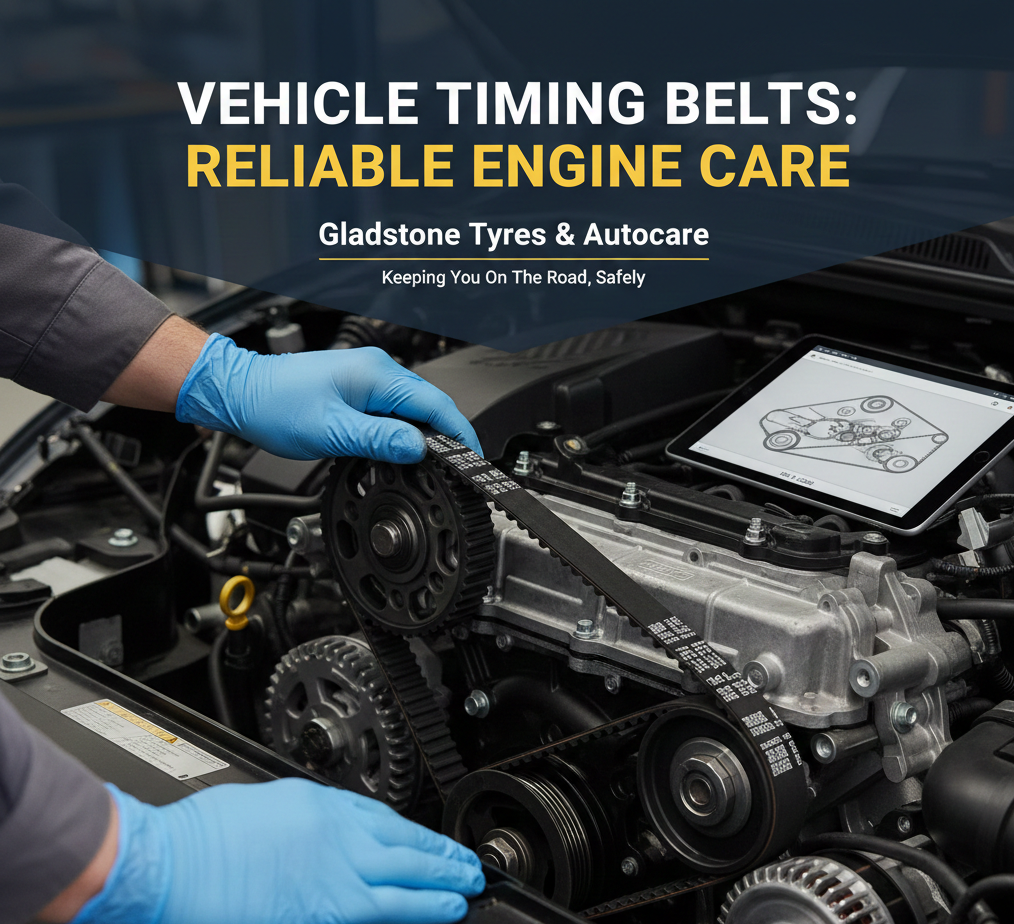
Because timing belts operate continuously during engine use, they are exposed to tension, heat, and friction. Over time, natural wear occurs. Understanding their function and scheduling appropriate inspection helps drivers protect performance and avoid unexpected mechanical disruption.
Motorists throughout York rely on Gladstone Tyres & Autocare for dependable servicing and guidance. By understanding how vehicle timing belts function and recognizing their maintenance needs, drivers can make informed decisions that support dependable vehicle operation.
Understanding Vehicle Timing Belts and Engine Synchronization
Vehicle timing belts connect the crankshaft and camshaft, ensuring valves open and close in precise alignment with piston movement. This synchronization allows combustion to occur efficiently while preventing interference between internal components.
Proper synchronization supports:
- Smooth acceleration
- Stable engine response
- Efficient fuel consumption
- Reduced internal wear
Because timing belts operate under constant stress, gradual deterioration is inevitable. Educational insight into timing system mechanics can be explored through independent automotive guidance available on Rac
Routine evaluation allows technicians to identify early signs of wear and maintain system balance before performance is affected.
Why Vehicle Timing Belts Maintenance Supports Performance
Engine Stability Through Vehicle Timing Belts Monitoring
Maintaining belt condition ensures coordinated engine movement. Stable synchronization contributes to predictable power delivery and smoother driving experiences.
Preventive Protection from Vehicle Timing Belts Inspection
Regular inspection helps detect wear before operational disruption occurs. Preventive care allows drivers to schedule servicing calmly rather than respond to sudden issues.
Efficiency Improvements with Healthy Vehicle Timing Belts
Accurate valve timing improves combustion efficiency and helps maintain balanced fuel use.
Component Longevity and Vehicle Timing Belts Care
Proper maintenance reduces strain on related components, extending overall engine lifespan.
Technicians at Gladstone Tyres & Autocare help drivers evaluate condition and determine suitable servicing intervals based on usage patterns.
Signs That Vehicle Timing Belts Require Attention
Drivers should remain aware of potential indicators that suggest internal components may need inspection. Although vehicle timing belts are not visible during everyday use, certain changes in vehicle behaviour can signal developing wear. Paying attention to these signs helps drivers take action early and avoid unnecessary disruption.
Common indicators include:
- Unusual ticking sounds
- Difficulty starting
- Irregular engine behaviour
- Visible wear during servicing
Unusual sounds often arise when belt tension or alignment begins to shift. Likewise, difficulty starting may occur if synchronization is affected, causing combustion cycles to operate inefficiently. Irregular engine behaviour — such as hesitation or inconsistent response — may also reflect coordination issues within internal systems. Additionally, when technicians observe visible wear during routine maintenance checks, it may indicate that inspection or replacement should be considered.
Recognizing these signals early encourages timely evaluation and reduces escalation risk. Even subtle performance changes warrant professional inspection. Addressing concerns at an early stage supports smoother engine operation and strengthens long-term reliability.
The table below summarizes common signs and their potential implications:
| Indicator | What It May Suggest | Recommended Action |
|---|---|---|
| Unusual ticking sounds | Possible tension or alignment changes | Schedule inspection |
| Difficulty starting | Synchronization irregularity | Seek evaluation |
| Irregular engine behaviour | Combustion timing inconsistency | Monitor and consult technician |
| Visible wear during servicing | Material fatigue or deterioration | Plan maintenance |
By understanding these indicators, drivers gain greater awareness of internal system health. Remaining attentive to changes in performance supports proactive maintenance habits and helps ensure dependable vehicle operation over time.
Inspection and Replacement of Vehicle Timing Belts
Regular inspection and timely replacement play an essential role in maintaining engine coordination and overall vehicle reliability. Because vehicle timing belts operate under constant tension and motion, their condition naturally changes over time. Structured servicing helps ensure that vehicle timing belts remain aligned, responsive, and capable of supporting stable engine performance.
Professional evaluation of vehicle timing belts not only protects mechanical efficiency but also supports confident ownership. By understanding the stages involved in inspection and replacement, drivers gain clarity regarding maintenance expectations and long-term planning.
Routine Checks for Vehicle Timing Belts Condition
Scheduled inspection allows technicians to detect alignment or tension inconsistencies affecting vehicle timing belts before performance is impacted. During evaluation, professionals assess belt condition, positioning, and interaction with related components. These checks help identify early signs of deterioration that may not yet influence everyday driving.
Routine monitoring of vehicle timing belts contributes to smoother engine coordination and reduces uncertainty surrounding component reliability. Incorporating inspection into regular servicing appointments allows drivers to maintain awareness without unnecessary disruption.
Replacement Planning for Vehicle Timing Belts
Following recommended service intervals supports engine stability and minimizes uncertainty regarding vehicle timing belts lifespan. Rather than waiting for visible wear or performance concerns, structured planning allows replacement to occur at the most appropriate stage of use.
Proactive planning for vehicle timing belts maintenance offers several benefits:
- Reduced risk of unexpected disruption
- Improved maintenance scheduling
- Greater confidence in vehicle dependability
- Better long-term performance consistency
Technicians provide guidance based on vehicle model, mileage patterns, and driving conditions to ensure servicing recommendations remain practical and relevant.
Professional Installation of Vehicle Timing Belts
Precision installation ensures vehicle timing belts maintain accurate synchronization and mechanical reliability. Because timing systems require exact alignment, professional tools and technical expertise are essential. Qualified technicians verify positioning, tension, and system balance to support continued performance.
Proper installation of vehicle timing belts protects engine integrity and helps ensure smooth operation.
Documentation Tracking for Vehicle Timing Belts Service
Maintaining service history related to vehicle timing belts supports future planning and resale transparency. Recording inspection and replacement details provides valuable reference for ongoing maintenance decisions. Documentation also demonstrates responsible ownership when vehicles are evaluated for resale or transfer.
Accurate records help technicians track servicing timelines and provide informed recommendations regarding vehicle timing belts care, strengthening long-term vehicle management.
Choosing Gladstone Tyres & Autocare for Vehicle Timing Belts Services
Local Expertise in Vehicle Timing Belts Care
Technicians understand regional driving patterns and provide practical recommendations.
Transparent Communication About Vehicle Timing Belts
Clear explanations support informed decision-making.
Technical Capability in Vehicle Timing Belts Installation
Modern equipment ensures reliable servicing outcomes.
Customer-Focused Vehicle Timing Belts Support
Approachable interaction builds long-term trust.
Technology Enhancing Vehicle Timing Belts Servicing
Modern servicing environments incorporate:
- Digital diagnostics
- Precision alignment tools
- Inspection software
- Performance monitoring
These technologies strengthen accuracy and ensure dependable evaluation.
Long-Term Value of Maintaining Vehicle Timing Belts
Consistent care contributes to:
- Reliable engine performance
- Reduced likelihood of major faults
- Extended vehicle lifespan
- Improved resale confidence
Proactive attention supports ownership satisfaction and operational reliability.
Environmental Benefits of Healthy Vehicle Timing Belts
Efficient synchronization improves combustion balance, supporting reduced emissions and responsible fuel use. Maintaining the condition of vehicle timing belts contributes to environmentally mindful driving by helping engines operate smoothly and efficiently. When timing systems function correctly, fuel burns more completely, reducing unnecessary waste and supporting cleaner operation.
Improved Combustion Efficiency
Healthy vehicle timing belts allow engine components to move in precise coordination. This coordination promotes stable combustion cycles that minimize excess fuel consumption and reduce strain on emission-related systems. Over time, maintaining this balance helps vehicles perform consistently while limiting avoidable environmental impact.
Reduced Mechanical Strain and Energy Waste
Proper care of vehicle timing belts encourages efficient energy use throughout engine operation. Engines functioning under optimal synchronization require less corrective effort to maintain performance. Consequently, mechanical stress is reduced and operational efficiency improves. Even modest improvements in system balance can contribute to more responsible vehicle use when maintained consistently.
Supporting Sustainable Maintenance Awareness
Routine inspection helps detect irregularities that may influence fuel efficiency or emissions output. Addressing these concerns promptly ensures vehicles continue operating within expected performance parameters. By staying aware of internal system health, drivers actively support sustainability while preserving vehicle reliability.
Long-Term Environmental Responsibility
Ultimately, prioritizing the condition of vehicle timing belts aligns practical maintenance with environmental responsibility. Consistent servicing and informed driving habits contribute to long-term engine performance while encouraging conscientious resource use. Responsible maintenance decisions therefore benefit both individual motorists and broader environmental considerations.
Integrating Timing Belt Care into Routine Maintenance
Effective vehicle care involves considering how different mechanical systems interact with one another. Monitoring timing belt condition alongside routine servicing tasks — such as fluid checks, engine evaluation, and performance reviews — helps maintain overall balance within the engine. Because synchronization influences multiple components, including this assessment in broader maintenance planning supports stable and dependable operation.
Integrating timing belt care into scheduled servicing also improves efficiency. Rather than treating it as a separate task, combining inspections with regular maintenance allows technicians to evaluate condition without disrupting drivers’ routines. This approach encourages proactive awareness and helps ensure potential concerns are addressed early.
Drivers who adopt integrated maintenance habits often experience:
- More streamlined servicing appointments
- Better awareness of vehicle condition
- Reduced long-term mechanical strain
- Greater confidence in day-to-day reliability
Viewing this aspect of engine care as part of a holistic maintenance strategy strengthens overall dependability. By maintaining attention across interconnected systems, motorists support smoother coordination and long-term performance consistency.
Financial Perspective of Timing Belt Maintenance
Preventive servicing frequently proves more economical than reactive repair. Addressing component wear early allows drivers to plan maintenance more predictably and reduces the likelihood of extensive mechanical complications. Structured attention to internal engine systems helps avoid sudden disruptions that may require urgent intervention.
Planning ahead also supports confident budgeting. When servicing is scheduled strategically, costs can be managed gradually rather than appearing unexpectedly. This proactive mindset reduces uncertainty and contributes to more stable vehicle ownership experiences.
Financial advantages associated with timely attention include:
- Lower risk of major engine damage
- More predictable maintenance planning
- Preservation of long-term vehicle value
- Reduced likelihood of emergency repairs
Ultimately, understanding the financial implications of maintenance decisions encourages informed ownership. By prioritizing early evaluation and thoughtful scheduling, drivers maintain balance between performance reliability and practical cost management.
Driver Confidence and Vehicle Timing Belts Reliability
Confidence in vehicle performance stems from knowing internal systems operate correctly. Regular inspection reinforces peace of mind and allows motorists to focus on travel rather than mechanical concern.
Professional guidance from Gladstone Tyres & Autocare supports informed ownership and strengthens trust in vehicle capability.
Conclusion
Vehicle timing belts are essential for maintaining synchronization, efficiency, and stability within modern engines. Although not immediately visible, their influence on performance is substantial. By understanding their role and prioritizing inspection, drivers protect reliability and ensure smoother operation.
Motorists seeking dependable servicing can rely on Gladstone Tyres & Autocare for knowledgeable support and structured evaluation. Through proactive care and informed planning, vehicles remain efficient, dependable, and ready for everyday journeys.
FAQs About Vehicle Timing Belts
How do drivers know when to ask for an inspection?
If a vehicle has reached a higher mileage interval, shows performance changes, or is undergoing routine servicing, it’s a good time to request an evaluation. Regular checks help prevent uncertainty and maintain engine stability.
Can belt condition affect overall driving comfort?
Yes. Proper synchronization contributes to smoother acceleration and consistent engine response. When coordination declines, drivers may notice reduced smoothness or responsiveness.
Is it possible to inspect timing components during standard servicing?
In many cases, technicians review related systems during routine appointments. Asking for a dedicated assessment ensures thorough evaluation without requiring a separate visit.
Does vehicle age influence maintenance planning?
Older vehicles may require closer monitoring due to cumulative wear, while newer vehicles benefit from early awareness to maintain long-term reliability.
Can maintenance improve resale confidence?
Documented care demonstrates responsible ownership. Buyers often value evidence of consistent servicing, which may strengthen confidence during evaluation.
Why choose professional evaluation instead of self-checking?
Internal components require specialized tools and expertise to assess accurately. Professional technicians provide informed recommendations based on technical evaluation rather than visual estimation.