Amidst the complex world of your car's suspension, there are some small, unassuming parts doing a massive job. Anti roll bar bushes are a perfect example. These are tough, flexible components, usually made from rubber or polyurethane, that securely fasten your car's anti roll bar to its main body or chassis.
Think of them as a crucial buffer. They provide a snug fit for the bar, allowing it to pivot and twist as it should, but they also absorb a huge amount of vibration. This simple job is absolutely vital for sharp handling and a comfortable ride.
What Do Anti Roll Bar Bushes Actually Do?
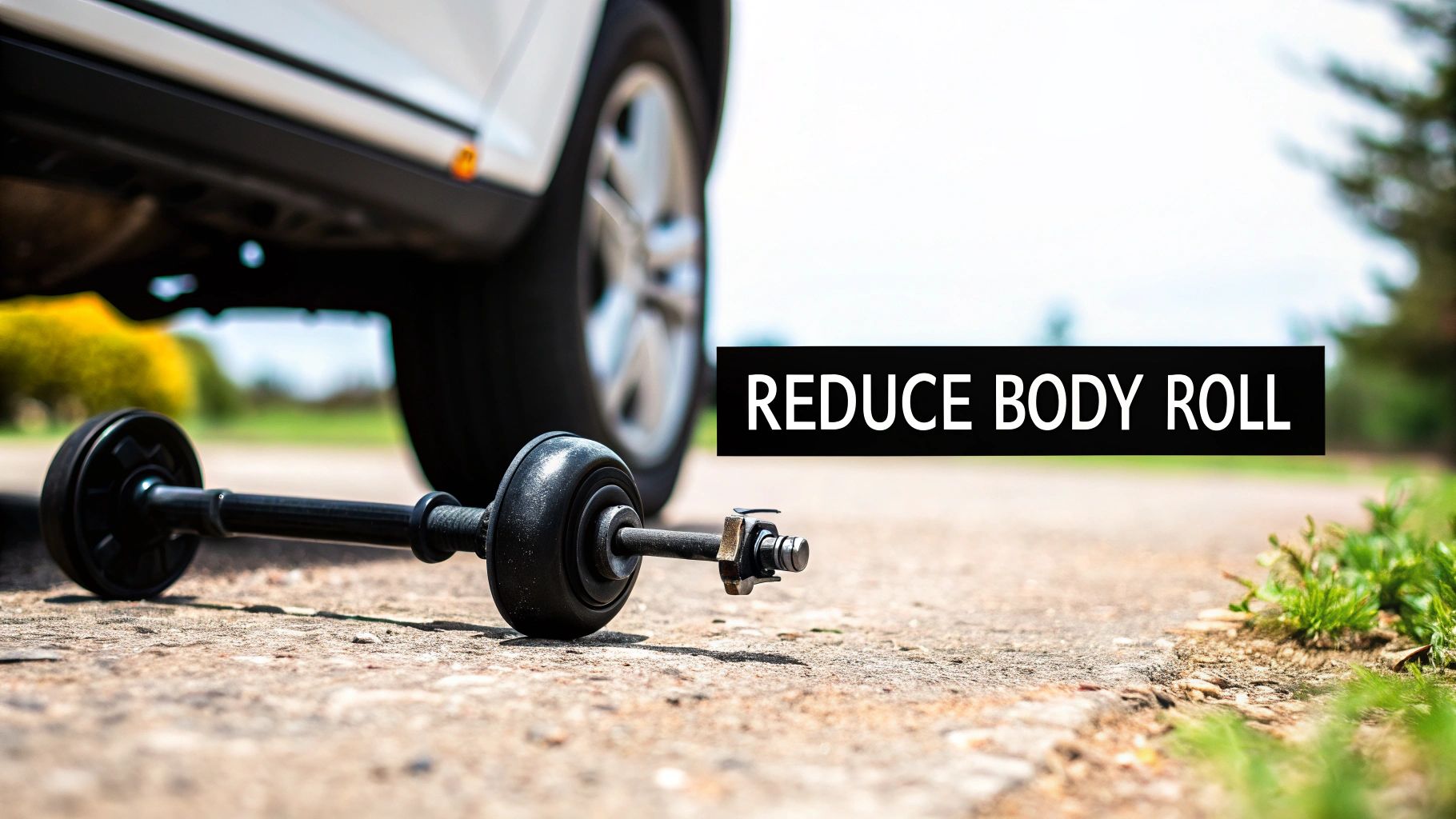
To really get what the bushes do, you first need to understand the anti roll bar itself (sometimes called a sway bar). When you take a sharp corner, your car's entire weight lurches to one side, causing the body to lean or "roll." The anti roll bar is a clever torsion spring that connects the left and right wheels, working to counteract that lean and keep your car as flat and stable as possible.
So, where do the bushes fit in? They are the mounts that physically attach that metal bar to your car's frame. Without them, you’d just have a solid steel bar scraping against a metal chassis – a recipe for terrible noise, jarring vibrations, and rapid damage. The bushes create a firm, yet forgiving, connection point.
The Three Core Functions
You can boil the job of an anti roll bar bush down to three main duties:
- A Secure Anchor: First and foremost, they clamp the anti roll bar firmly in place. This solid mounting is what allows the bar to do its job and resist body roll when you’re cornering.
- A Vibration Damper: The bushes soak up harshness and noise from the road surface, stopping it from travelling through the suspension and into the cabin. This is a big reason your ride feels smooth and quiet.
- A Flexible Pivot: While holding the bar tight, they also need just enough flexibility to let it rotate slightly as your wheels move up and down over bumps.
It’s helpful to picture them as the cartilage in your car's suspension joints. They manage incredible forces day in and day out, providing a strong but flexible link. They work in silence, doing their job perfectly—right up until they wear out.
When the bushes degrade, the whole system is compromised. A worn bush allows the anti roll bar to move and knock about, which is the source of the classic clunking sounds and vague, sloppy handling that signal a problem.
This isn’t a rare issue, especially here in the UK. With official data showing that nearly 45% of cars on UK roads are over 10 years old, the need for suspension maintenance is constantly growing. You can dive deeper into this trend in reports on the automotive anti-roll bar market.
Here's the rewritten section, crafted to sound like an experienced human expert.
What Are the Telltale Signs of Failing Bushes?
When your anti-roll bar bushes start to wear out, your car will almost certainly let you know about it. They rarely fail quietly. Instead, you'll get a series of clear, telltale clues – both sounds you can hear and changes you can feel – that something’s not quite right underneath you. Spotting these signs early is key to sorting the problem before it causes more trouble.
The most common giveaway is a very distinct clunking or knocking noise that seems to come from the suspension. You'll notice it most when you’re driving at lower speeds over bumps, potholes, or uneven roads. That noise is the sound of the anti-roll bar moving around in its mounting because the worn bush has created a gap, allowing it to knock against the car's frame with every jolt.
What to Listen For
This isn't your average, everyday rattle. The sound of a failing bush is typically a deep, hollow "clunk" rather than a tinny, high-pitched noise. You might hear it when you turn sharply into your driveway or navigate the ramps in a multi-storey car park. It's the suspension's way of telling you that a vital part is no longer held securely in place.
How it Feels Behind the Wheel
It's not just about the noise; you'll feel the difference in the way the car drives, too. When these bushes wear out, they introduce a looseness into the suspension system that you can feel through the steering wheel and the car’s overall response.
- Sloppy or vague steering: The car might feel a bit lazy or slow to react when you turn the wheel. You might notice a slight delay or a 'dead spot' where nothing much happens.
- More body roll in corners: When you take a corner, does the car seem to lean or wallow more than it used to? That’s a classic sign. The anti-roll bar can't do its job properly if the bushes aren't holding it firm.
- A generally 'loose' feeling: The car might just feel less connected to the road, a bit wobbly or unstable, particularly on rougher surfaces or winding country lanes.
These aren't just minor quirks to get used to; they are genuine safety warnings. In fact, suspension problems are a frequent cause of MOT failures right here in the UK. Official data shows that around 12% of all car MOT failures are down to suspension faults, and worn anti-roll bar bushes are a common culprit. If you're interested in the wider market, you can find more data on anti-roll bar components.
Think of it this way: if you hear a clunk and the handling feels off, that's your car asking for a check-up. Putting it off can put extra strain on other parts like the drop links and ball joints, which could mean a much bigger and more expensive repair job later on.
Rubber vs Polyurethane Bushes
When your anti roll bar bushes need replacing, you’ve got a decision to make that will genuinely change how your car feels on the road. The choice is between sticking with the standard rubber bushes your car came with or upgrading to a popular aftermarket option: polyurethane. There isn't a single "right" answer here—it all comes down to what you want from your car.
OEM Standard: The Comfort of Rubber
Car manufacturers almost always fit rubber bushes straight from the factory, and for good reason. Rubber is fantastic at soaking up vibrations and road noise, giving you that quiet, comfortable ride you expect from a new car. It's soft, it's flexible, and it does a brilliant job of isolating you from the harshness of the tarmac.
But that softness is also its Achilles' heel. Rubber doesn’t last forever. Over time, it gets brittle, cracks, and perishes, which is exactly what leads to those clunking sounds and the vague, sloppy handling we talked about earlier. If you simply want to restore that factory-fresh feel and prioritise a quiet journey, a set of high-quality rubber replacements is a perfectly good choice.
The Performance Upgrade: Going Poly
For drivers who want a sharper, more connected feel behind the wheel, polyurethane (or 'poly') bushes are a fantastic upgrade. Polyurethane is a modern polymer that’s much tougher and more durable than rubber. It stands up incredibly well to oil, heat, and road grime, meaning it lasts a whole lot longer.
Because it’s a firmer material, it grips the anti roll bar much more tightly. This simple difference makes a huge impact on your driving experience. You’ll notice the steering feels more responsive, the car leans less on corners, and the whole chassis feels tighter and more precise. It’s no wonder poly bushes are such a popular first step for driving enthusiasts.
This infographic neatly sums up the classic signs that your bushes are on their way out.
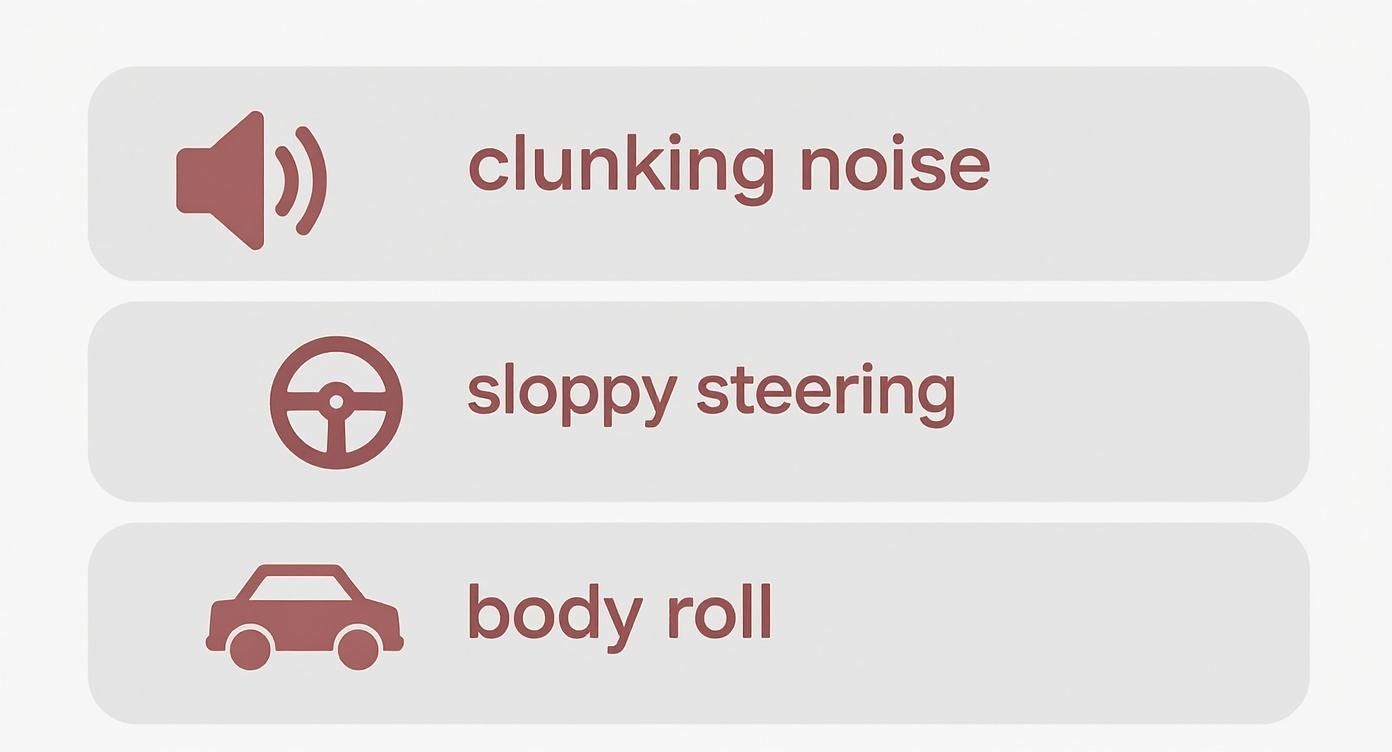
Whether it’s an annoying clunk over bumps or a steering wheel that feels a bit disconnected, these symptoms all point to unwanted movement in your suspension—the very thing polyurethane bushes are designed to eliminate.
Finding the Right Balance
So, what's the catch? The main trade-off with polyurethane is that its firmness can let a little more road noise and vibration into the cabin. While modern formulas are far more refined than they used to be, you might notice the ride is slightly firmer than it was with fresh rubber.
There’s also the cost. Trends from UK automotive suppliers show that polyurethane bushes now make up about 35% of the replacement market, a testament to their growing popularity. They typically cost 20–30% more than their rubber equivalents, but their vastly superior lifespan often makes them better value in the long run. You can dive deeper into these UK automotive market trends if you're interested.
To make things clearer, let's break down the key differences.
Comparison of Rubber and Polyurethane Bushes
Here’s a side-by-side analysis of the key characteristics of rubber and polyurethane anti roll bar bushes to help you decide.
| Feature | Rubber Bushes (OEM Standard) | Polyurethane Bushes (Performance Upgrade) |
|---|---|---|
| Feel & Comfort | Excellent at absorbing vibration for a quiet, smooth ride. | Firmer ride; may transmit more road noise and vibration. |
| Handling | Provides the standard, factory-spec handling characteristics. | Significantly reduces body roll and sharpens steering response. |
| Durability | Prone to perishing, cracking, and wear from oil/heat. | Highly resistant to chemicals, heat, and abrasion. |
| Lifespan | Shorter service life; may need replacing every few years. | Much longer service life, often outlasting the car itself. |
| Cost | Lower initial purchase price. | Higher initial cost but can be better value long-term. |
| Best For | Drivers prioritising a quiet, comfortable, factory-spec ride. | Enthusiast drivers seeking improved performance and longevity. |
Ultimately, the choice is a personal one based on your priorities.
The decision boils down to this: for a quiet, factory-spec ride, rubber is ideal. For improved handling, a more engaging drive, and superior longevity, polyurethane is the clear winner.
How to Inspect Your Anti Roll Bar Bushes
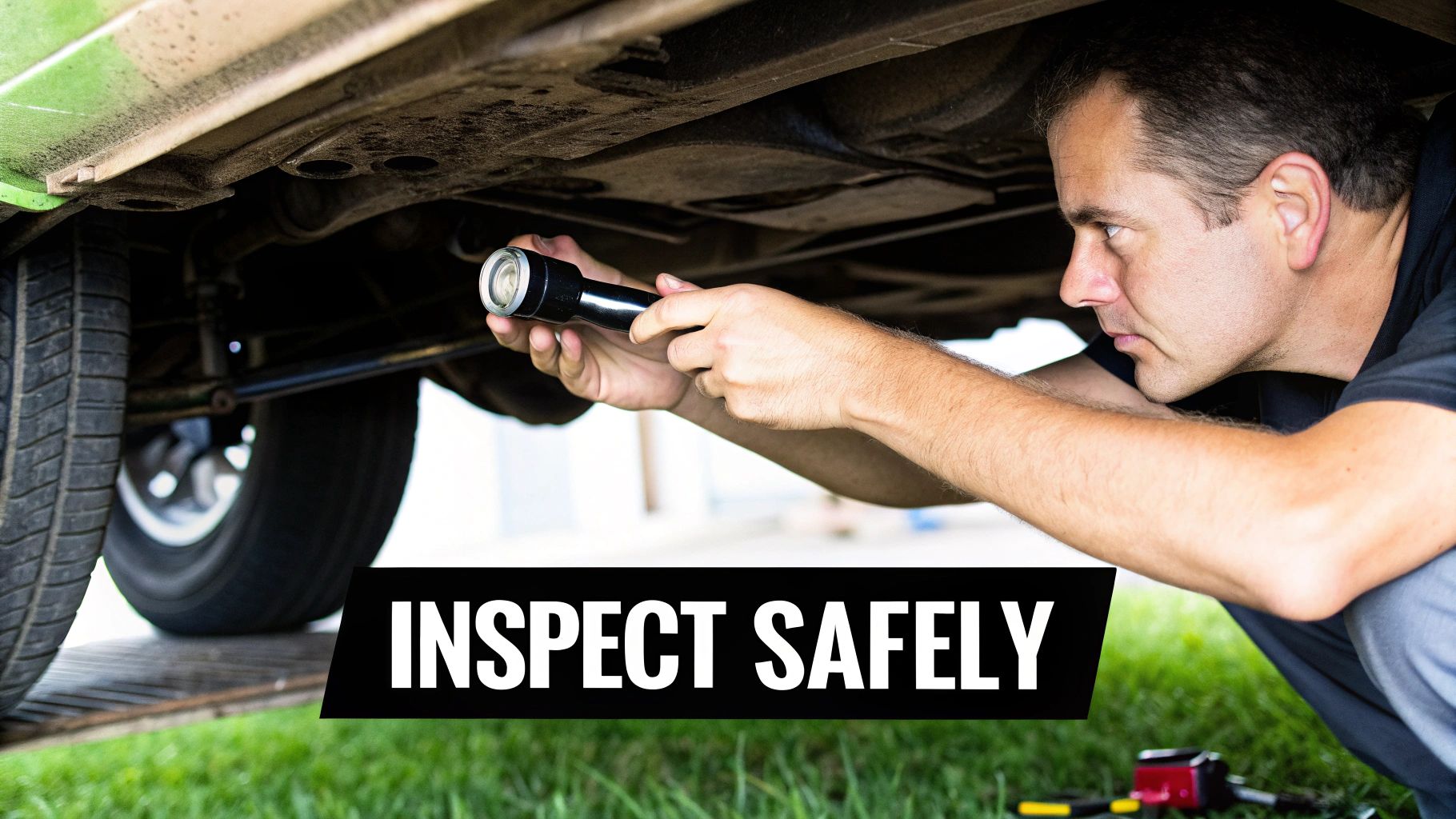
If you're hearing strange noises or feeling that something isn't quite right with your car's handling, your anti roll bar bushes are a good place to start looking. A quick check can often reveal the source of the problem. While we always recommend a professional eye for a proper diagnosis, you can absolutely do a preliminary look-see at home to spot the most obvious signs of trouble.
Before you even think about looking underneath, let's talk safety. Make sure your car is on a flat, solid surface with the handbrake on. Critically, never, ever get under a car that’s only held up by a jack. You need to use proper axle stands that are rated for your vehicle's weight. Getting to the bushes means jacking up either the front or back of the car, so doing it safely is non-negotiable.
The Visual Check
With the car safely raised and supported, you should be able to see the anti roll bar and where it's mounted to the chassis. This is where you can start playing detective.
- Cracks and Perishing: Get a good look at the rubber bush itself. Is it covered in cracks, big or small? Does the rubber look dry and brittle? Over time, rubber perishes, and this is a dead giveaway that it’s past its best.
- Deformation or Bulging: A new bush is perfectly formed to do its job. A worn one will look squashed, distorted, or even squeezed out from under its metal clamp. If it’s lost its shape, it’s lost its ability to hold the bar tightly.
- Shiny Metal: Look at the anti roll bar right where it enters the bush. If you see a polished, shiny patch on the bar, that’s a classic sign. It means the bush is so loose that the bar is moving around and rubbing directly against the metal bracket.
A healthy bush should look like it’s giving the anti roll bar a firm, even hug. Any obvious gaps, splits in the rubber, or a misshapen appearance means it's time for a replacement.
The Physical Test
Sometimes, a bush can look okay but still be worn out. This is where a physical test comes in handy. Remember to be careful and keep your hands and body clear of any potential pinch points.
What you’re feeling for is any "play" or looseness. Grab the anti roll bar close to the bush and give it a good, firm wiggle. Try moving it up and down, and forwards and backwards. You shouldn’t feel much movement at all, and you definitely shouldn't hear a clunking sound. While a tiny bit of rotation is fine, any clunk or noticeable shift means there's a gap inside the bush that shouldn't be there.
These home checks are brilliant for spotting the obvious, but they don't beat a professional assessment. A trained technician has the experience and the right tools (like pry bars) to check for wear with much greater accuracy and safety.
If you’re not 100% sure what you're looking at, or if the symptoms are still there after your check, it’s always best to get an expert opinion. A thorough suspension inspection is a key part of our comprehensive car safety checks in York, where we make sure every little part is doing its job properly.
What to Expect for Replacement Costs and Time
Let's talk about the bottom line: what’s this going to cost? When it comes to car repairs, the final bill is always a key concern. The good news is that replacing anti-roll bar bushes is one of those jobs that gives you a lot of bang for your buck—a noticeable improvement in how your car feels for a relatively small investment.
The total cost really comes down to two things: the parts and the labour.
Happily, the bushes themselves aren't expensive. A new set of standard rubber bushes for a typical family car will likely set you back somewhere between £15 and £30. If you're looking for a longer-lasting upgrade, polyurethane bushes are a great option, usually costing between £30 and £60 depending on the make and model of your car.
If you're weighing up your options, it's worth getting your head around the key differences between OEM vs Aftermarket parts. This will help you find the best balance of quality and value for your own car and driving style.
Labour Time and Final Cost
For a seasoned mechanic with the right kit, swapping out a set of anti-roll bar bushes is a pretty routine task. It’s not a big, complicated job.
Most garages can get it all done in about one to two hours. With typical UK labour rates, you should expect the total bill, including the new bushes and the fitting, to land somewhere in the £100 to £200 range.
Of course, a few things can nudge that price up or down:
- Your Car: Some vehicles are designed in a way that makes accessing the bushes a bit fiddly, which can add a little extra time to the job.
- Rust and Seizures: If the old bolts are caked in rust and refuse to budge, a technician might have to spend more time coaxing them out.
- "While You're In There" Jobs: It often makes sense to replace the anti-roll bar drop links at the same time if they're also looking a bit tired. This will add to the parts cost but can save on labour down the line.
These small but mighty components play a huge role in keeping UK vehicles safe and handling correctly. In fact, the suspension bush market in the UK is valued at around £150 million annually for both passenger cars and commercial vehicles. It’s a testament to just how critical these parts are for a smooth, safe ride.
Why Choose Professional Suspension Repair
While swapping out anti-roll bar bushes might look like a simple job on the surface, there's a bit more to it than just undoing a few bolts. Getting it right is crucial for your car's handling and safety, and a professional touch eliminates the guesswork that can lead to more significant problems down the line.
Opting for a professional suspension repair means you're tapping into the knowledge and resources of a dedicated automotive workshop. Here at Gladstone Tyres & Autocare, our certified technicians have seen it all before. We have the specialised tools and hands-on experience to tackle the job efficiently, making sure everything is perfect for your specific make and model.
The Gladstone Autocare Advantage
The quality of the installation is just as important as the quality of the part itself. Here’s what makes the difference:
- Using Quality Parts: We only fit high-grade rubber or polyurethane bushes that are built to last, meeting or even exceeding the original manufacturer's standards.
- Proper Torque Settings: This is a big one. Over-tightening the bolts can crush the new bush before it's even done a mile, while leaving them too loose means it'll fail in no time. We tighten everything to precise manufacturer specifications.
- Post-Repair Checks: Once the new bushes are in, we often recommend a wheel alignment check. This ensures your car’s geometry is perfectly dialled in for sharp handling and even tyre wear.
Trusting an expert means your car is in safe hands. The small investment in professional labour guarantees the job is done right, restoring your vehicle's stability and giving you complete peace of mind on the road.
Don’t let worn bushes compromise your drive. If you suspect an issue, book an inspection with our team for a wide range of expert mechanical repairs.
Common Questions About Anti Roll Bar Bushes
Even when you know what anti roll bar bushes are for, it's normal to have a few more practical questions pop into your head. After years in the workshop, we've heard just about every query imaginable when it comes to suspension. Here are the answers to the questions our technicians get asked most often.
We've put together this quick-fire guide to cover the real-world details that matter most to drivers like you. From how long they last to whether it's safe to drive on them, these are the points that come up time and again when you first suspect a problem.
How Long Should Anti Roll Bar Bushes Last?
There’s no hard and fast rule for when to replace your anti roll bar bushes, as their lifespan really depends on the car, your driving style, and the roads you use. For the standard rubber ones fitted in most cars from the factory, you can generally expect them to last around 40,000 to 60,000 miles. But if your daily commute involves navigating a minefield of potholes, they'll likely give up the ghost much sooner.
If you've upgraded to polyurethane bushes, it's a different story altogether. These are built to be tough as old boots, standing up to oil, heat, and general road grime far better than rubber. It’s not unusual for a set of poly bushes to last well over 100,000 miles—in many cases, they’ll outlive the car itself.
Can I Drive with Worn Bushes?
Technically, yes, the car will still move. But should you? Absolutely not. It’s strongly discouraged, and not just because of the annoying clunking noises. This is a real safety issue. Worn bushes seriously compromise your car's handling and stability.
Here’s what that feels like from behind the wheel:
- Increased Body Roll: The car will lean and sway much more dramatically when you go around corners, making it feel unstable and unpredictable.
- Reduced Steering Response: Your steering will feel vague and less direct, almost "sloppy." This makes it harder to react quickly and accurately.
- Poor Stability: The car might feel generally unsettled, especially over bumpy roads or at motorway speeds.
Pushing your luck and driving on worn bushes also puts a huge amount of extra stress on other suspension parts, like the drop links and ball joints. It's a sure-fire way to turn a small, affordable fix into a much bigger and more expensive garage bill.
Key Takeaway: Worn anti roll bar bushes aren't just a noisy inconvenience—they're a genuine safety risk. Getting them sorted promptly will restore your car's handling and prevent a domino effect of damage throughout your suspension.
Is Replacing Bushes a DIY Job?
For a seasoned home mechanic who has the right kit, then yes, it's a doable weekend job. You'll need a decent socket set, a torque wrench, pry bars, and most importantly, a set of sturdy axle stands for safety. This isn't one for beginners, though.
Access is often awkward, tucked away behind other components. Plus, the bolts holding the old bushes in place have likely been there for years, exposed to all the elements, so they can be completely seized with rust and a real battle to remove. Getting the torque settings spot on when fitting the new ones is also crucial; too tight and you'll crush the bush, too loose and it'll fail in no time. For these reasons, many people decide the peace of mind that comes with professional fitting is well worth it.
At Gladstone Tyres & Autocare, our qualified technicians have the experience and specialist tools to replace your anti roll bar bushes correctly and efficiently. We'll get you back on the road safely and with confidence. Book your suspension inspection online today at https://gladstonegarage.co.uk.
Article created using Outrank